April 21, 2026
Video Production in Greenville SC That Works
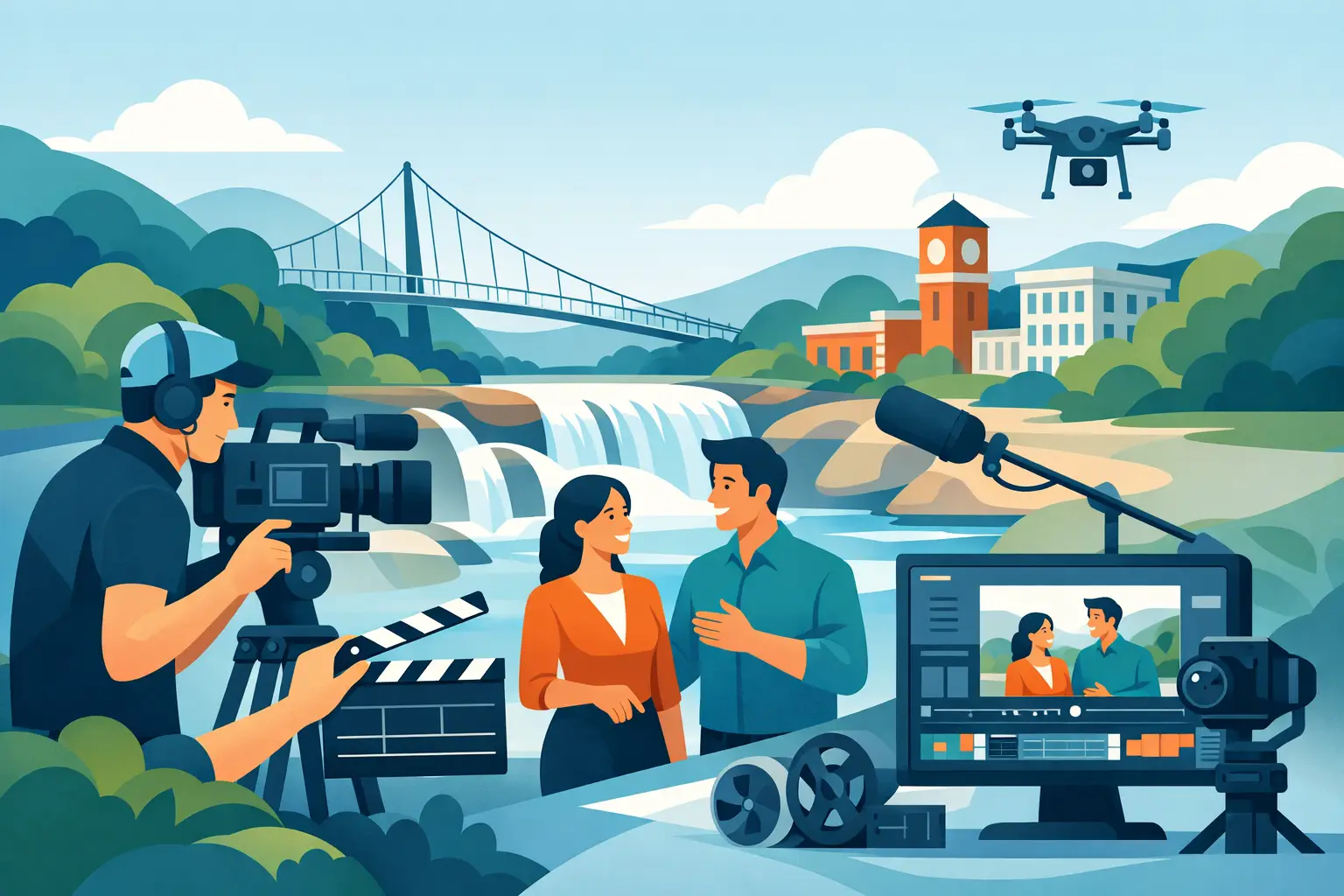
Before we jump in, you should know that Let People See is here for all your video production needs. We're based in Greenville, SC and travel all over the country. Explore around our site to find out more. For now, let's dive in to the details!
A polished video with no business purpose is just an expensive file.
That is the real test in Greenville SC video production. Not whether the footage looks cinematic. Not whether the edit has flashy transitions. The question is whether the video helps a company sell, recruit, explain, launch, report, or earn trust faster than it could without video.
For business leaders, marketers, and agency teams, that distinction matters. Corporate video is not a side project. It is a communication tool, and if the production partner does not understand that, things get costly in a hurry.
What good Greenville SC video production actually does
A strong business video should solve a communication problem. Sometimes that means giving a sales team a sharper brand story. Sometimes it means helping a manufacturer show processes that are difficult to explain with copy alone. Sometimes it means capturing an event so the impact lasts longer than the room rental.
The best Greenville SC video production work starts with clarity about the job the video needs to do. A recruiting video should not be built like a product launch. A plant-floor operations video should not sound like a consumer ad. An agency client may need footage structured for multiple campaign cutdowns, while an internal communications team may need a straightforward leadership message that feels confident and human.
When production is aligned to business use, decisions get easier. Script tone, interview setup, camera style, edit pacing, and deliverables all become more deliberate. That usually leads to better results and fewer revisions, which every sane marketing team appreciates.
Why business buyers should care about specialization
Not every production company is built for corporate work. That is not a criticism. It is just reality.
Some teams are strongest in weddings, music videos, or entertainment content. Those formats require talent. They just do not prepare a crew for legal review cycles, plant safety rules, executive stakeholders, agency approvals, or a five-minute shoot window with a C-suite leader who would rather be anywhere else.
Business-focused video production requires a different kind of discipline. Crews need to know how to work around operations, protect brand standards, and stay efficient on set. Producers need to manage scope cleanly, communicate with stakeholders, and keep the project moving without drama. Editors need to understand that the final video may need six versions for web, sales, paid media, trade shows, and internal use.
That is why specialization matters. A business client is not hiring for artistic vibes alone. They are hiring for execution under real-world constraints.
The three categories companies ask for most
Corporate demand tends to cluster around a few practical needs, and each one calls for a different production approach.
Corporate brand and communications videos
These projects are often built to establish credibility. Think company overviews, leadership messages, recruiting videos, testimonial pieces, and culture content. The goal is usually trust at scale. Prospects, employees, investors, and partners all need a quick read on who the company is and whether it looks like it knows what it is doing.
This kind of work succeeds when it feels polished but not stiff. Too much polish can make people sound rehearsed. Too little polish makes the company look smaller than it wants to appear. The right balance depends on audience and distribution.
Manufacturing and industrial video content
This is where many generalist crews get exposed.
Filming in manufacturing environments means dealing with noise, safety protocols, PPE, moving equipment, unpredictable lighting, and subjects who are not trained on camera. It also means understanding what matters to the client. Sometimes that is precision and process. Sometimes it is workforce quality. Sometimes it is showing capacity, compliance, or operational sophistication.
A good manufacturing video does not just point a camera at machines and hope for the best. It translates technical competence into something customers, recruits, and stakeholders can understand quickly.
Event video services
Events move fast, and there are no do-overs when the keynote is over and the booth has been packed into crates.
Event production needs planning, coverage strategy, and speed. Some clients need a highlight reel for recap and promotion. Others need same-day edits, keynote capture, social clips, sponsor deliverables, or post-event content that feeds marketing for months. The point is not simply documenting the event. The point is extending its value.
What to look for in a video production partner
A strong reel is nice. Operational confidence is better.
The first thing to evaluate is whether the company understands business goals before talking about gear. Cameras matter, but message, audience, timeline, and usage matter more. If a production partner cannot explain how the video should function after delivery, that is a problem wearing a creative hat.
The second thing is process. Business clients need predictable communication, realistic schedules, and clear approvals. They need a crew that can handle pre-production without making internal teams babysit every detail. Good process is not glamorous, but it protects budget and keeps projects from drifting.
The third thing is adaptability. Some shoots are controlled and script-driven. Others are part documentary, part logistics exercise, part diplomacy. A dependable production company can adjust without letting quality slip. That matters even more when agencies are involved and multiple stakeholders need confidence that the production team will not go off-script, figuratively or otherwise.
Budget questions are normal, and the answer is usually it depends
Anyone pretending every business video should cost the same is either guessing or trying to speedrun a bad fit.
Budget depends on scope. A single interview shoot with light b-roll is different from a multi-day production across locations with motion graphics, scripting, drone footage, and multiple edit versions. Event coverage has different cost drivers than manufacturing footage. So does agency work that requires modular deliverables for campaign use.
The smarter question is not, "What does video cost?" It is, "What level of production is appropriate for the job?"
Sometimes a lean, well-planned shoot is exactly right. Sometimes a bigger investment makes sense because the video will support sales, recruiting, paid media, and trade events across a long shelf life. Under-producing a high-visibility piece can hurt more than delaying it. Over-producing a simple internal message is not efficient either. Good partners help clients find the right level, not the biggest invoice.
Why local context helps, but only when it is useful
There is value in a team that knows how business works in Greenville and the broader Southeast. Regional familiarity can make location planning easier, reduce travel friction, and help crews work more efficiently with local venues, industrial sites, and corporate teams.
That said, being local is not enough by itself. Proximity does not replace strategy, reliability, or production quality. The better standard is simple: choose a partner that combines business fluency with practical execution. If they happen to know the local landscape too, even better.
Where video projects usually go sideways
Most video problems are not creative problems. They are planning problems.
Projects stall when nobody defines the audience clearly, when stakeholders join late with competing opinions, or when the team tries to make one video do six incompatible jobs. Trouble also starts when review cycles are vague, executives are underprepared for interviews, or the client and production team have different ideas about what success looks like.
A solid production process solves a lot of this before the cameras show up. That means sharper discovery, realistic scheduling, better scripting, and a clear delivery plan. It is not glamorous, but neither is paying for avoidable reshoots.
The case for thinking beyond one video
The most effective companies do not treat video as a one-off asset. They treat it as a content system.
One production day can often create a flagship brand piece, short social edits, recruiting clips, sales support content, internal communications assets, and event visuals. That does not mean forcing every shoot into a content buffet. It means planning deliverables intentionally so the investment works harder.
This is especially useful for marketing teams that need consistency without constant production starts and stops. It is also helpful for agency partners balancing client expectations, timelines, and campaign variation. A production company with business sense will think that way from the start.
For organizations evaluating greenville sc video production, the safest bet is not the loudest creative pitch. It is the partner that understands your audience, respects your time, and knows how to turn production into something the business can actually use. Let People See is built around that idea, and frankly, more production companies should be.
The right video should make your next conversation easier before anyone says a word.
Related Articles
- Video Making Content Ideas for Brands That Actually Work
15 video making content ideas for brands that support sales, recruiting, events, and trust-building without wasting budget or strategy.
- 12 Types of Video Content That Actually Work for Businesses
See 12 types of video content businesses use to build trust, drive sales, support teams, and get more value from every production.
- How Do You Create Video Content That Works?
How do you create video content that actually drives results? Learn the process businesses use to plan, produce, and use video with purpose.
Ready to begin? Let's schedule a quick Good-Fit Call!
Explore More
Meet the team behind Let People See
What drives our work every day
How we plan, film, and deliver
Real results from real projects
Brand stories, training, recruitment
Conferences, activations, recaps
Facility tours and product films
Mission-driven storytelling
Destination and property videos
Answers to common questions
Where we film across the Southeast