April 12, 2026
What Is a Corporate Video Editor?
Before we jump in, you should know that Let People See is here for all your video production needs. We're based in Greenville, SC and travel all over the country. Explore around our site to find out more. For now, let's dive in to the details!
Most business videos are won or lost after the shoot. Great footage helps, sure. But the editor is the person who turns interviews, b-roll, graphics, audio, and stakeholder feedback into something a company can actually use.
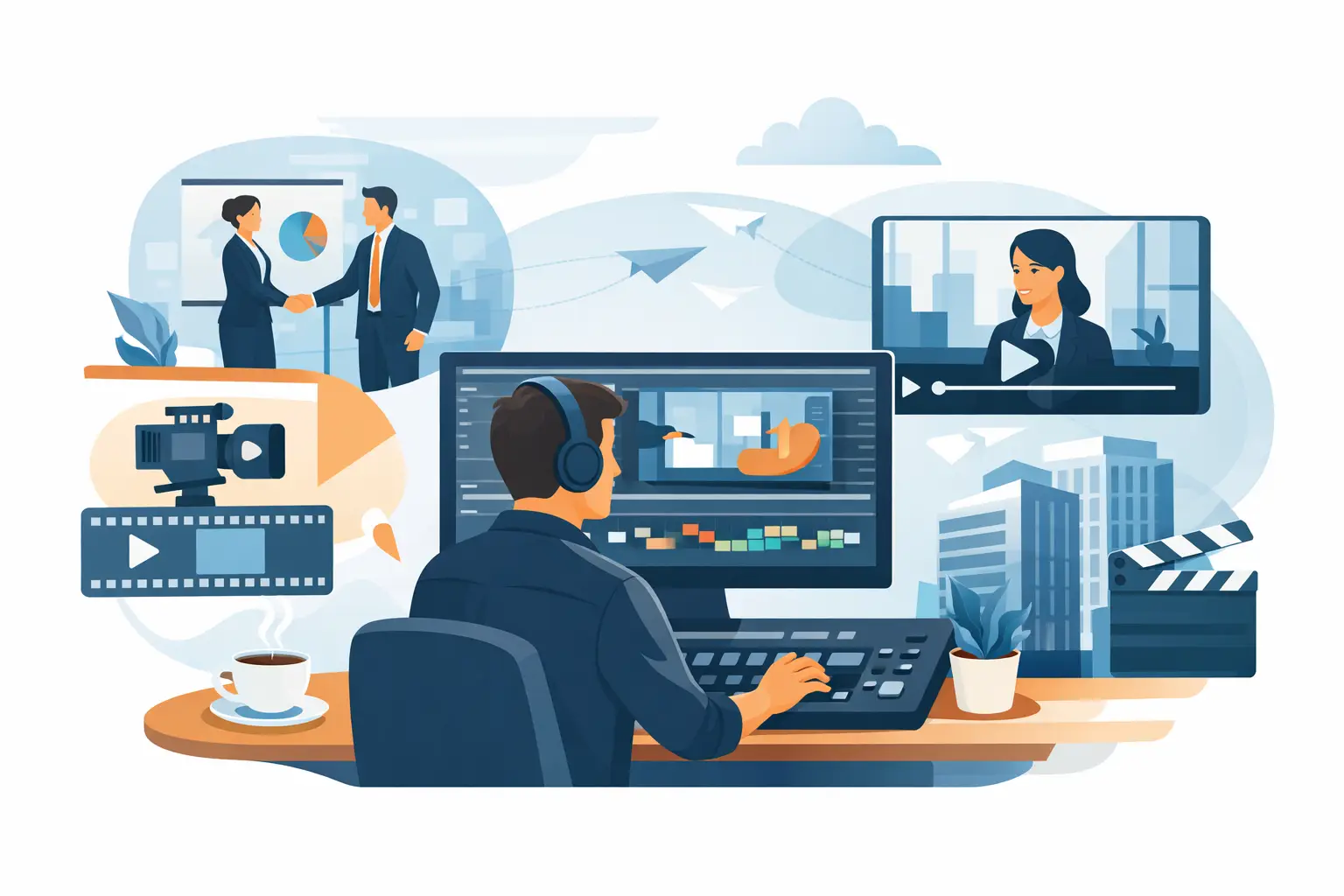
So, what is a corporate video editor? A corporate video editor is a post-production specialist who shapes raw video into polished content built for business goals. That might mean a brand film, a recruiting piece, an internal communications video, a customer testimonial, a product demo, or event recap content. The job is not just to make footage look good. It is to make the message clear, credible, on-brand, and usable in a corporate setting where multiple people often need to approve it.
What does a corporate video editor actually do?
A corporate video editor works at the point where creative execution meets business communication. They review footage, organize media, build the story, clean up audio, select b-roll, add music, integrate graphics, manage pacing, and prepare final exports for the intended platform. On paper, that sounds similar to other editing roles. In practice, corporate work has its own rules.
Business video is usually serving a defined objective. The editor is not cutting for pure entertainment value. They are cutting for clarity, trust, retention, and brand alignment. If a manufacturing company needs a plant tour video, the editor needs to make the process feel impressive and understandable without overcomplicating it. If a corporation needs an executive message, the editor has to balance polish with authenticity. If an agency needs white-label support, the editor has to follow the client brand closely and stay invisible in the best possible way.
That means the editor is making judgment calls constantly. Which sound bite gets the point across fastest? Which visuals support the claim on screen? How long should a pause stay before it feels awkward instead of thoughtful? Which lower thirds feel professional rather than overdesigned? Good editing is part taste, part process, and part damage control.
What is a corporate video editor responsible for?
The simplest answer is this: they make business footage usable.
That responsibility usually starts with organization. Corporate productions often generate a lot of material - multiple interviews, event coverage, drone footage, product shots, facility visuals, branded graphics, and several rounds of revisions. A corporate video editor has to wrangle all of it without losing the thread. If post-production is messy, the final video gets messy too.
From there, the editor builds structure. They might create a rough cut from interview sound bites, then layer in supporting footage that makes the story easier to follow. They adjust pacing so the video respects the viewer's time. They clean and mix audio so people do not have to fight to hear a speaker over HVAC noise or ballroom reverb. They color-correct footage so shots match across cameras and lighting setups. They also prep versions for web, social, presentations, trade shows, or internal distribution.
In many corporate environments, they are also responsible for revision management. That is not glamorous, but it matters. A business video may pass through marketing, communications, leadership, legal, sales, and sometimes a client-side agency team. The editor has to interpret feedback, protect the original intent where possible, and keep the project moving without turning it into a Frankenstein cut assembled by committee. Easier said than done.
How corporate video editing is different from other editing work
Not all editors are interchangeable. A talented music video editor or wedding editor may have sharp instincts, but corporate editing demands a different mix of skills.
First, there is brand discipline. A corporate video editor has to understand visual identity, tone of voice, messaging hierarchy, and how a company wants to appear to employees, customers, investors, or prospects. The video cannot feel off-brand just because the transitions are flashy.
Second, there is stakeholder awareness. Corporate videos usually have more decision-makers than entertainment projects of similar size. That changes the workflow. Editors need to be comfortable with review rounds, version control, and clear rationale for creative choices. They are not just editing footage. They are navigating approvals.
Third, there is business intent. Every piece of content needs to do something. It might support recruitment, clarify a service, recap an event, explain a process, or reinforce credibility. The editor has to understand the job the video is supposed to do. If they only focus on aesthetics, they miss half the assignment.
The skills that matter most
Technical software knowledge is expected. Adobe Premiere Pro, After Effects, (we use Final Cut Pro), DaVinci Resolve, audio cleanup tools, media management systems - those are table stakes. The more important question is whether the editor can use those tools in a way that supports business communication.
Strong corporate editors know how to find a usable narrative in interview footage, even when the speaker was not exactly delivering Oscar-worthy sound bites. They know how to trim executive rambling without making the person sound unnatural. They know when motion graphics help and when they start to look like someone got too excited in the template library.
They also need taste, restraint, and speed. Taste keeps the work professional. Restraint keeps the message from getting buried under effects. Speed matters because business deadlines are real, and nobody wants their event recap showing up after the next quarter has already started.
Communication skills are another major part of the role. A corporate video editor often has to explain why one version works better than another, translate vague feedback into practical edits, and collaborate with producers, marketers, and account teams. If they cannot communicate clearly, even good editing can become a frustrating process.
Where a corporate video editor adds the most value
Editing adds value anywhere the footage needs to do more than simply exist.
For marketing teams, that means shaping content that helps the brand look credible and intentional. A polished corporate edit can make a customer testimonial feel trustworthy, not stiff. It can turn a product overview into something that actually gets watched. It can help a company look established even when the shoot itself was straightforward.
For internal communications teams, the editor helps create clarity. Leadership updates, training videos, culture pieces, and onboarding content all benefit from structure and pacing. Employees do not need cinematic drama. They need communication that is clear, watchable, and respectful of their time.
For agencies, a strong corporate video editor is often the difference between a smooth delivery and a long month of revision churn. Agency clients expect polished output, quick response times, and tight adherence to brand standards. A dependable editor keeps the process under control.
For event content, editing is where the coverage becomes an asset instead of a folder full of clips nobody reopens. Highlight reels, same-day edits, speaker recaps, sponsor deliverables, and post-event promotion all depend on smart editorial choices.
When a business needs a corporate video editor
The short answer is whenever video needs to represent the company professionally.
If the content is public-facing, tied to brand reputation, or meant to influence a business decision, editing is not the place to wing it. That does not mean every project needs a massive post-production budget. A simple recruiting video can be effective with a lean edit. A large-scale brand campaign may need a deeper post process with graphics, sound design, and multiple deliverables. It depends on the audience, the stakes, and how many places the content needs to work.
Some organizations hire in-house editors because they produce video constantly. Others work with a production partner that provides editing as part of a full-service process. Neither model is automatically better. In-house can offer speed and familiarity. An outside production partner can offer broader experience, fresh perspective, and more production infrastructure. The right fit usually comes down to volume, complexity, and how strategic video is to the business.
What to look for in a corporate video editor
Start with judgment, not just a flashy reel. You want someone who understands how businesses communicate, how audiences watch, and how to keep a project aligned with the original objective.
Look for editing work that feels clean, intentional, and easy to follow. Notice whether interviews sound natural, whether visuals support the message, and whether graphics look like part of the brand instead of an afterthought. If everything is overloaded with effects, that is not always a sign of skill. Sometimes it is a sign that the editor is hiding weak storytelling.
You should also look for process reliability. Can they handle review cycles professionally? Do they organize revisions well? Can they deliver the practical formats your team needs? A great editor who creates chaos is still creating chaos.
At companies like Let People See, that business-first mindset is usually what separates a usable video from an expensive file. The edit has to work for stakeholders, brand standards, deadlines, and audience expectations all at once.
A corporate video editor is not just polishing footage. They are shaping how a business is seen, understood, and remembered. If the video matters to your company, the edit matters more than most people realize. Choose the person in that seat accordingly.
Related Articles
- B2B Brand Storytelling That Actually Works
B2B brand storytelling helps companies earn trust, clarify value, and move buyers. Here's how to make your story useful, credible, and clear.
- Story Brand Examples That Actually Work
See 9 story brand examples that clarify messaging, sharpen positioning, and show how brands turn customer pain points into action.
- What Manufacturing Video Production Should Do
Manufacturing video production should clarify process, build trust, support sales, and recruit talent - not just make your facility look busy.
Ready to begin? Let's schedule a quick Good-Fit Call!
Explore More
Meet the team behind Let People See
What drives our work every day
How we plan, film, and deliver
Real results from real projects
Brand stories, training, recruitment
Conferences, activations, recaps
Facility tours and product films
Mission-driven storytelling
Destination and property videos
Answers to common questions
Where we film across the Southeast