April 27, 2026
Live Streaming vs Event Recap Video: Which to Choose
Before we jump in, you should know that Let People See is here for all your video production needs. We're based in Greenville, SC and travel all over the country. Explore around our site to find out more. For now, let's dive in to the details!
If your event budget only has room for one major video deliverable, this is the question that matters: live streaming vs event recap video. Both can be valuable. Both can look great. But they solve different business problems, and choosing the wrong one usually means paying for reach when you needed reuse, or paying for polish when you needed immediacy.
For brands, corporations, and agencies, this decision should not start with camera specs or production gear. It should start with what the event needs to do after people leave the room - or before they ever arrive.
Live streaming vs event recap video: what changes the decision
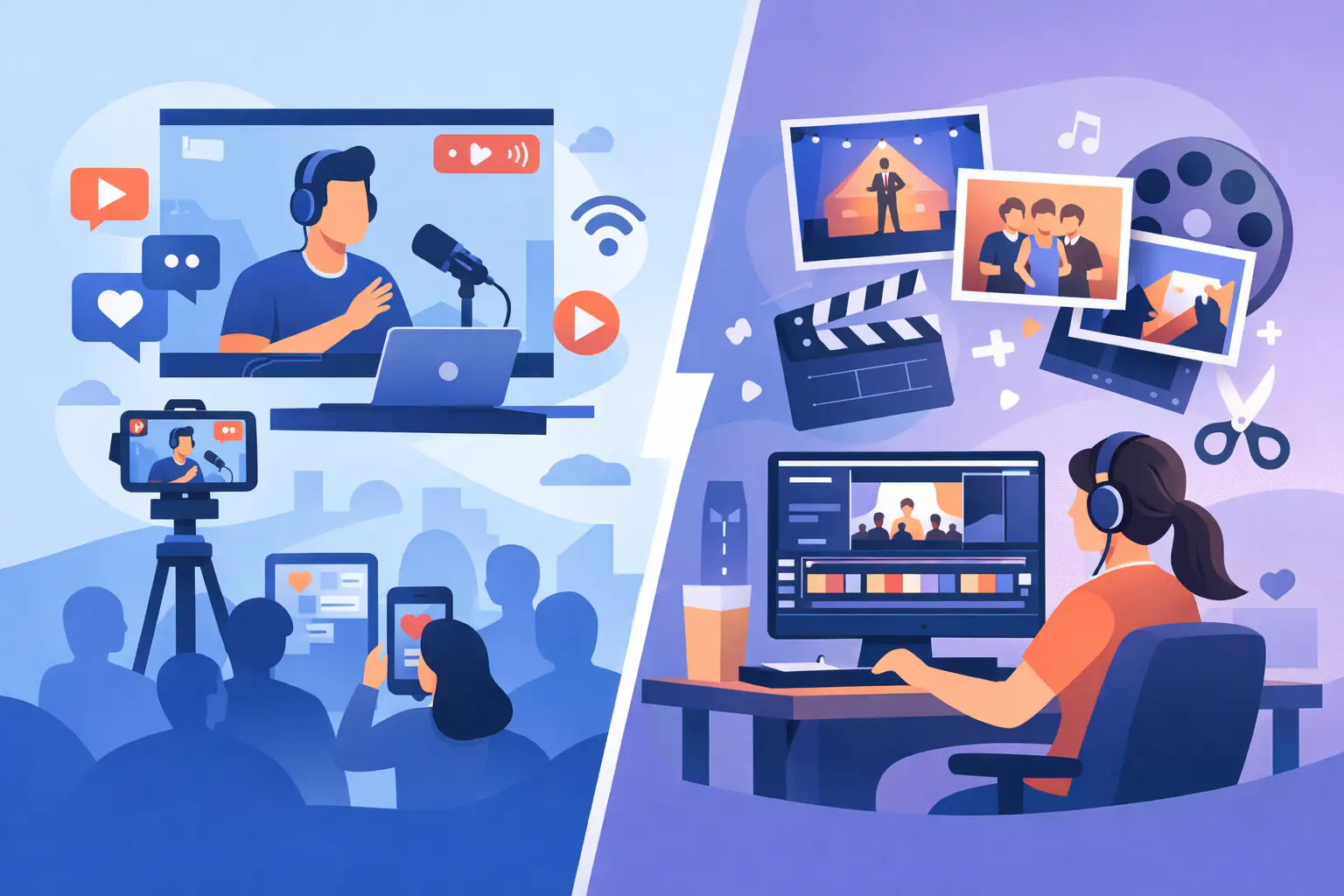
Live streaming is built for access. It helps remote audiences attend in real time, expands the event beyond the room, and creates a sense of immediacy that recorded content cannot replicate. If leadership is speaking to distributed teams, if customers across multiple markets need to tune in, or if attendance caps are limiting your in-person audience, streaming solves a real problem.
An event recap video is built for longevity. It turns the event into a marketing asset you can use after the fact. Instead of asking people to show up at a specific hour, it gives your team a polished story that can support future promotion, brand visibility, sponsor value, recruiting, and internal communications.
That difference sounds obvious, but it gets blurred all the time. Companies ask for a livestream because they want their event to feel bigger. What they actually need is a short, sharp recap that proves the event was worth attending and helps next year's registration. Other teams request a recap when the real need is to include employees, distributors, or partners who cannot be there live.
The format should match the job.
When live streaming is the smarter investment
Live streaming makes sense when attendance itself is the goal. That is especially true for shareholder updates, corporate town halls, product announcements, training sessions, conferences with a dispersed audience, and events where real-time participation matters.
The strongest argument for streaming is reach. It allows people in other offices, states, or time zones to attend without travel. For companies with distributed teams or national stakeholders, that can be the difference between a high-value communication and a room-bound presentation.
It also adds urgency. A livestream creates an appointment. People know something is happening now, which can increase attention in ways on-demand video often does not. If your event includes a launch, a keynote, or executive messaging that benefits from immediacy, that timing matters.
But livestreaming is not magic. A lot of organizations assume a livestream automatically extends the impact of an event. Sometimes it does. Sometimes it just extends the schedule. If the audience has no real reason to tune in live, viewership can be modest, even for well-run events.
There is also less room for cleanup. Live production requires reliable internet, stronger technical planning, confident presenters, and a team that can manage switching, audio, graphics, and platform delivery without a second take. If something goes sideways, your audience gets the director's cut whether you like it or not.
That does not make streaming risky by default. It just means it is operationally demanding. The reward is immediate access. The trade-off is reduced control.
When an event recap video delivers more value
An event recap video is often the better choice when the event needs to keep working after it ends. This is where marketing teams usually get more mileage from the budget.
A strong recap compresses the energy, turnout, messaging, and brand presence of an event into something people will actually watch. It can highlight keynote moments, attendee reactions, sponsor participation, product demos, venue atmosphere, and branded details in a way that feels intentional rather than merely documented.
That matters because most audiences do not want to watch an hour of event footage later. They want the best moments, shaped into a clear story. A recap gives them that.
For demand generation and brand marketing, recap videos tend to outperform raw event recordings because they are designed for attention. They are shorter, tighter, and edited with purpose. They can support future event promotion, social campaigns, sales conversations, recruiting content, and internal wins. One event can produce an asset library instead of a single moment in time.
There is also more control over quality. Editing allows you to refine pacing, select stronger soundbites, improve visual consistency, and make sure the final piece aligns with the brand. If your executives were great in person but a little long-winded on stage, editing is your friend. It has saved many a message from becoming a hostage situation.
The trade-off is timing. A recap does not help remote audiences attend the event as it happens. It also does not create live interaction. Its value is downstream.
Audience behavior matters more than preference
A practical way to choose between live streaming vs event recap video is to look at how your audience actually consumes information, not how you hope they will.
If your audience is made up of employees, channel partners, members, or stakeholders who need timely access to the content, livestreaming is often the right call. They benefit from being included in the moment. Access is the product.
If your audience is future attendees, prospective clients, sponsors, recruits, or general market viewers, a recap video is usually more effective. They do not need the full event. They need proof that the event had value, energy, and credibility.
This distinction is especially important for B2B events. Business audiences are busy, and they are selective. Asking them to watch a live session requires a stronger reason than asking them to watch a one-minute recap later. One demands time on your schedule. The other earns attention on its own merits.
Budget is not just about cost
A lot of teams frame this as a budget question, which is fair, but the better question is return.
Livestreaming often carries more technical demands upfront. You may need platform planning, network testing, backup systems, live audio support, graphics integration, and operators who can run a broadcast environment instead of a standard event shoot. The cost is tied to reliability because failure is public.
Event recap production usually places more value in post-production. Coverage still matters, but the editing process is where the asset takes shape. Music, pacing, structure, motion graphics, soundbites, and brand polish all affect whether the final piece feels premium or forgettable.
Neither option is automatically cheaper in a meaningful sense. The better question is what the finished product is going to do for the business. If a recap video supports six months of marketing, sales, and recruiting use, it may produce more value than a one-time livestream. If a livestream allows hundreds of remote stakeholders to participate in a critical event, that may be the smarter spend.
Cheap is not a strategy. Useful is.
The hybrid option is often the real answer
Here is the part many teams discover after the first planning call: this does not always need to be a strict either-or decision.
If the event is high stakes enough, the strongest approach is often a hybrid production plan. Stream the keynote, panel, or main session for remote access, then create a recap video from the broader event coverage for post-event marketing. That gives you both immediacy and shelf life.
This works particularly well for annual conferences, large corporate meetings, customer events, and branded experiences where multiple audiences matter. Your internal team or remote stakeholders can participate live, while your marketing team leaves with an asset that keeps working long after the venue is packed up.
The catch is that hybrid only works when it is planned as one coordinated production, not two competing priorities. Coverage needs, crew structure, audio capture, and shot planning all need to support both outcomes. Otherwise, you can end up with a decent stream and a weak recap, which is the video equivalent of ordering two entrees and liking neither.
How to decide without overcomplicating it
Ask three direct questions.
First, does the audience need to experience this in real time? If yes, livestreaming belongs in the conversation.
Second, does the event need to generate marketing value after it ends? If yes, a recap video likely matters more than a full recording.
Third, will this content be reused across channels, teams, or campaigns? If the answer is yes, recap content usually carries more long-term utility.
That is why many business events benefit more from recap production than organizers initially expect. Once the event is over, the recap becomes proof of momentum. It helps sales teams show market presence, helps marketing teams promote the next event, and helps leadership demonstrate activity, investment, and engagement.
For organizations that want dependable business value from event video, the best choice is not the format that sounds more impressive. It is the one that matches the communication goal, the audience behavior, and the life span you need from the content.
If you are planning an event and weighing the options, keep the question simple: do you need people to show up now, or do you need the event to keep showing up later? That answer usually tells you exactly where the camera should point.
Related Articles
- How to Plan a Corporate Video That Actually Works
Learn how to plan a corporate video with clear goals, smart scripting, realistic budgets, and a production process built for business results.
- How Much Does Event Videography Cost?
How much does event videography cost? Learn what drives pricing, typical ranges, and how businesses can budget for event video with confidence.
- A Manufacturing Training Video Guide for Real Operations
A manufacturing training video guide for safer onboarding, faster ramp-up, and clearer SOPs that improve consistency without wasting floor time.
Ready to begin? Let's schedule a quick Good-Fit Call!
Explore More
Meet the team behind Let People See
What drives our work every day
How we plan, film, and deliver
Real results from real projects
Brand stories, training, recruitment
Conferences, activations, recaps
Facility tours and product films
Mission-driven storytelling
Destination and property videos
Answers to common questions
Where we film across the Southeast